Standing Tall Across Cultures: Five Days on the Trinity River with the Warrior Institute
This trip took me somewhere I'd never been — not just geographically, but inside a way of being I'd only known about from the outside.
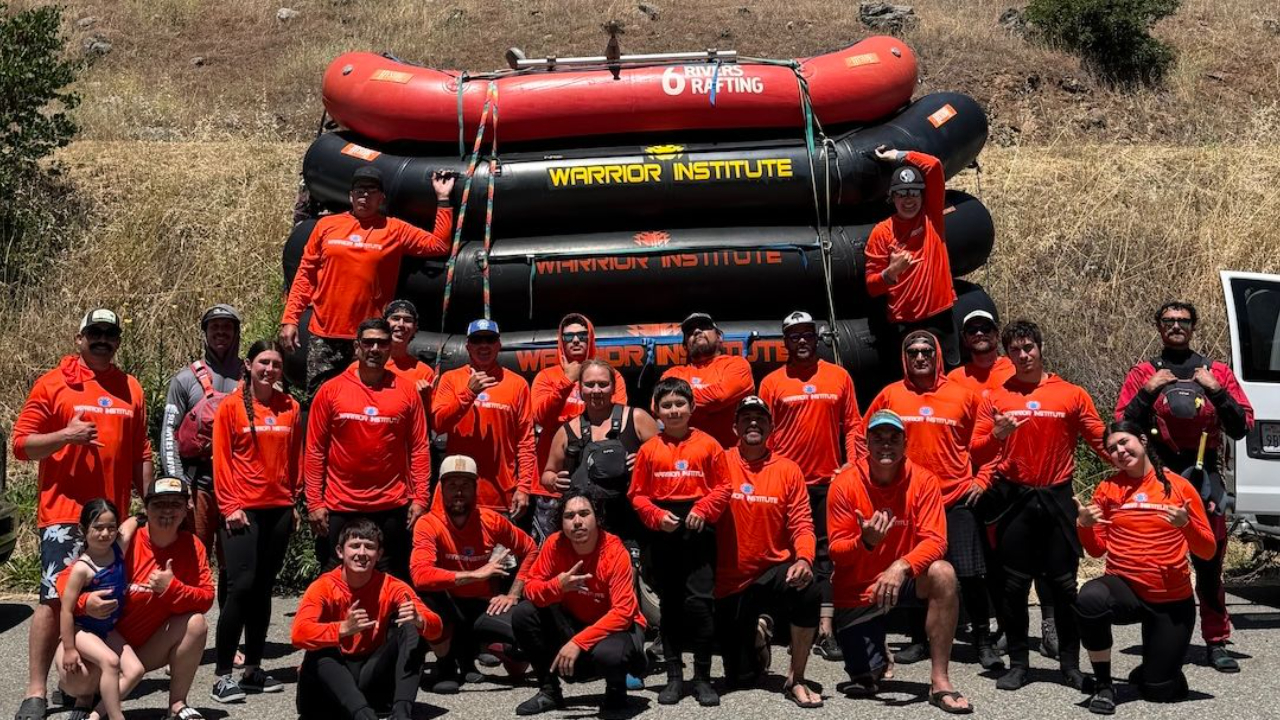
For five days I was off the grid in Northern California, on the Trinity River with the Warrior Institute, learning how to guide a raft. No signal, no screens — just water and currents and terrain, and a community of people teaching one another how to read all three.
It was a guide rafting school. It was also more than that.
A school for river people
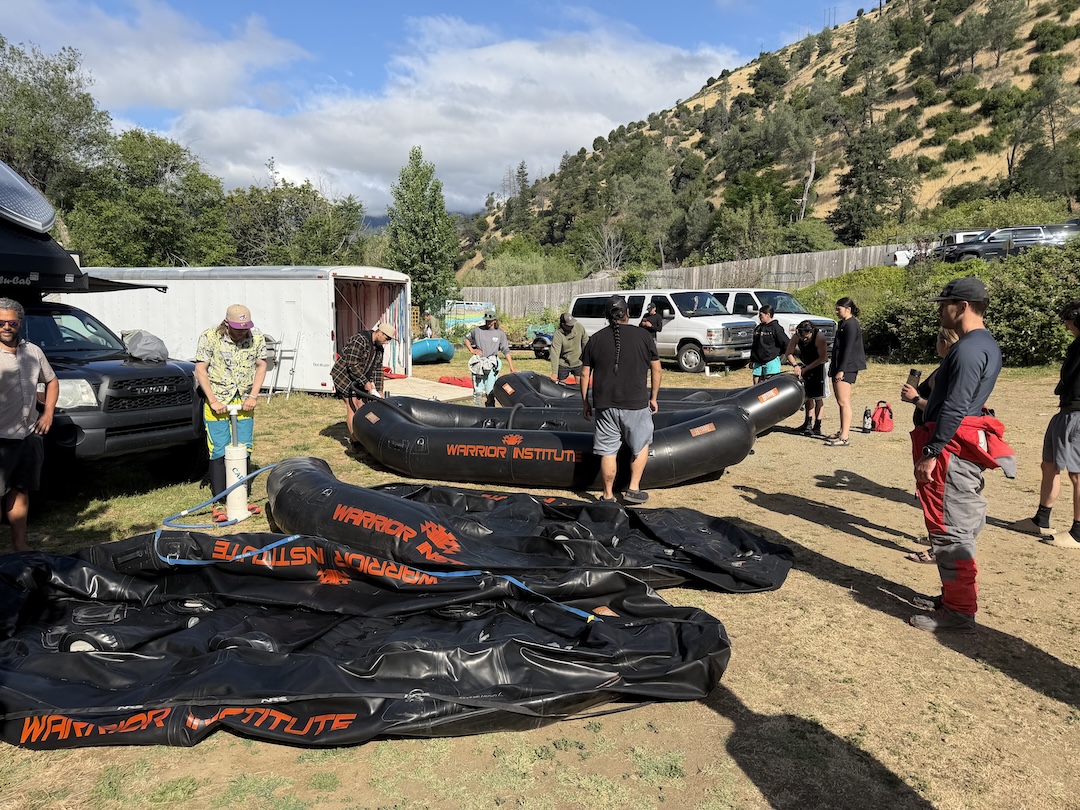
The Warrior Institute works with Native youth across Humboldt County — Yurok, Karuk, Hoopa, Tolowa, and others — to build strong body, mind, and spirit. The mission is to awaken the warrior spirit in each young person, especially the ones still finding their footing. The way they do it: real practices, on real land, in community.
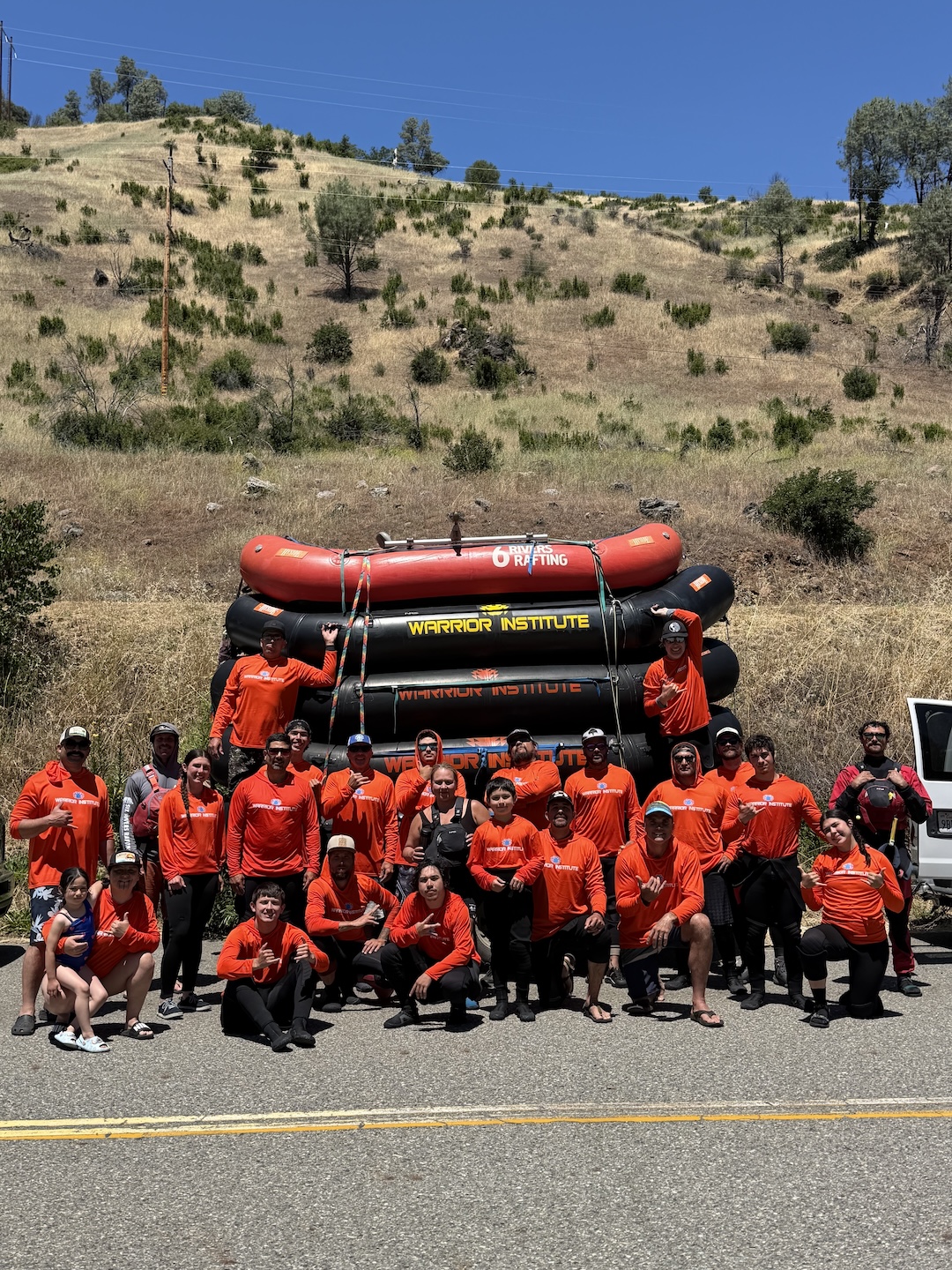
This particular gathering was a five-day partnership with Six Rivers Rafting on the Trinity River. The goal: teach a new generation of guides, youth and community members from the surrounding tribes, how to safely move down the river. How to read the water, how to feel the currents, how to know the terrain by hand and eye.
For the Hoopa people in particular, this is a return to lineage. The Hoopa are known as river people. The Trinity has carried their goods, their elders, their ceremonies, and their daily lives for as long as there has been Hoopa.
The point of the school wasn't recreation. It was reconnection.
The tribes here are working to bring their people back to the water — back to the canoes, back to the river, back to the relationship that had been weakened over generations. Just like Hawaiians are working to reconnect with the outrigger canoe and the ocean, the river people here are practicing the same return.
There's a practical layer too. A guide who can safely move the river can transport equipment and goods to communities that aren't reachable by road. They can bring elders to ceremonial grounds. They can connect tribe members across distances the highway can't bridge.
In other words: the rafting skill isn't separate from the cultural mission. It is the mission. Learning to guide the river is learning to take care of your people.
Different terrain, same posture
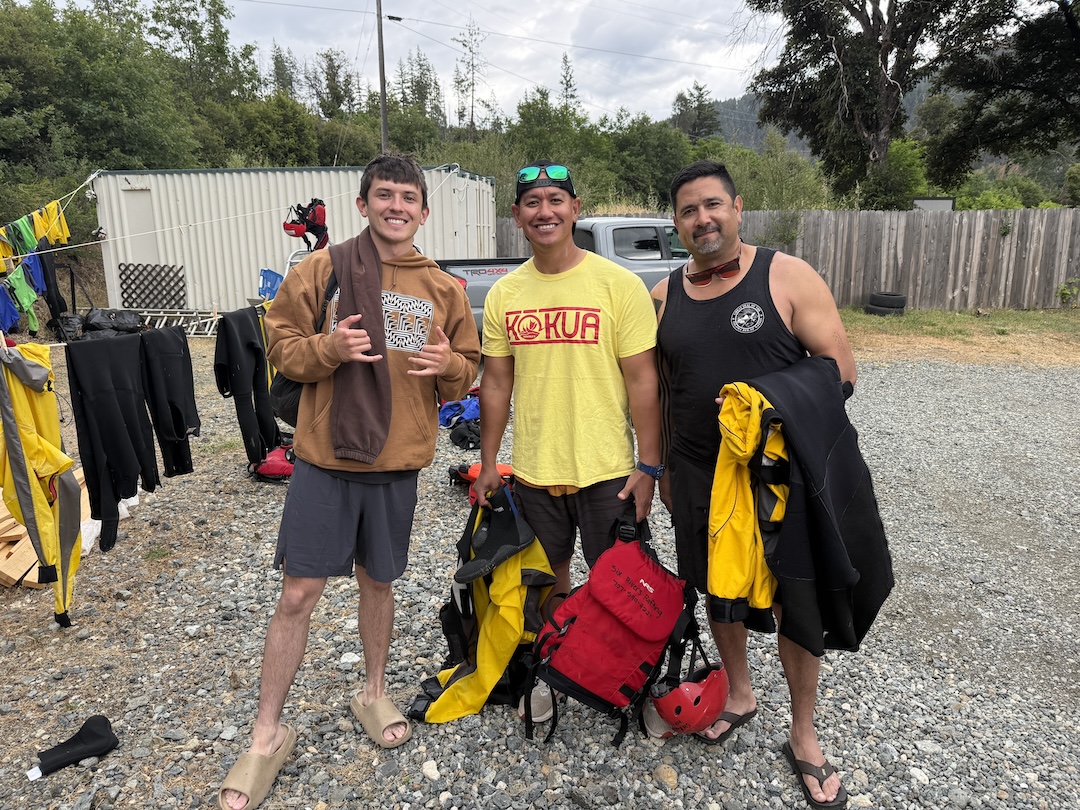
I'm a Hawaiian. I grew up in the islands, with the ocean as my edge. I'd never been on a river like this. I'd certainly never been on whitewater.
But here's what I kept noticing: the same compass was at work.
Reconnect to the basics — land, water, mountain, sky. Be out in nature long enough that the body starts to remember what the mind hasn't been holding well. Eat together, help where you're needed, show up for the elder and for the youth.
Different terrain. Same posture.
I also got to see something I hadn't expected. We had my good friend and native brother, Jude's mom as the head of the camp kitchen — one person, feeding everyone. And what happened naturally, without anyone organizing it, was that everyone else started showing up to help — cutting vegetables, carrying pots, cleaning up. Nobody asked. Nobody had to.
That's a cultural muscle. Hands appear when hands are needed. We have it in Hawaiʻi too — but it was beautiful to watch it operating in a different community, in a different language, on a different water.
What we could do more of
Here's what I left thinking about the most.
These communities do a lot of ceremony — coming-of-age, healing, gathering for dance, marking transitions. The youth I met have grown up in those rooms; they know what ceremony feels like, what it does, why it matters, how it shapes a person.
I think we could do more of that as Hawaiians. We have the practice in us. Some places carry it well. Others have let it thin out. Watching what I watched in Northern California, I felt that gap in our own work.
Cross-cultural learning isn't about borrowing somebody else's culture. It's about seeing your own more clearly. Standing in someone else's tradition, you notice what's strong in your own — and what could be stronger.
That's the gift of being invited into spaces like this. You don't just learn about another community. You see your own with fresh eyes.
KŪ is a Hawaiian practice. That's not changing. But the practice itself — standing tall, feeling grounded, carrying yourself with intention — isn't only Hawaiian. It's a posture other Indigenous communities know in their own languages, on their own land, on their own water.
When we stand alongside other cultures — really stand alongside, not pass through — we end up taller, not shorter.
Mahalo to the Warrior Institute, to Six Rivers Rafting, to the Hoopa, Karuk, Yurok, and Tolowa community members who made room for me on the river. To Jude and his mom in the kitchen. To everyone who shared a fire and a meal and a question.
Standing tall isn't a solo practice. We stand taller - together.
Stand tall. Feel grounded. Live Kū.