More Veggies, More Aloha: Alana Kysar on Cooking, Memory, and Coming Home
Some conversations stay with you longer than the recording. This was one of them.
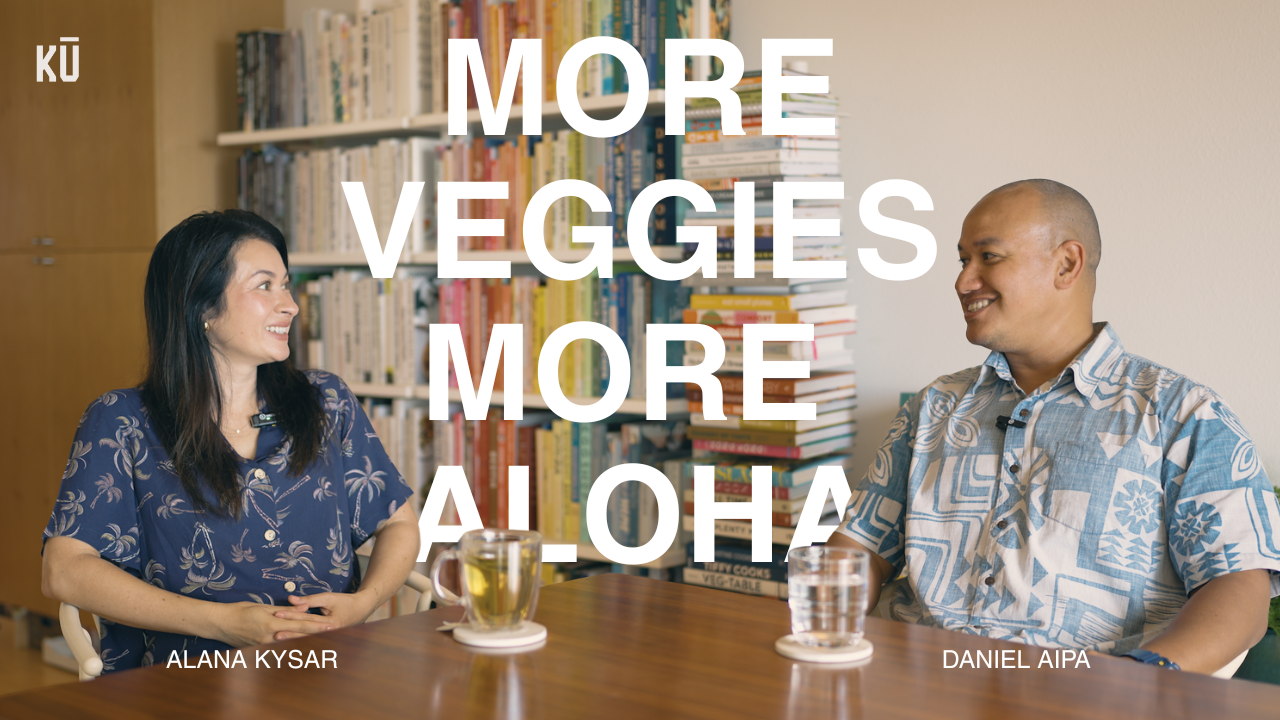
Author, cook, and storyteller Alana Kysar joined me on The KŪ Project Podcast to talk about Aloha Veggies — her new cookbook of vegetable-forward versions of the dishes you'd recognize from a yard or a tutu's kitchen. Shoyu chicken. Loco moco. Mochiko. The plates that don't need an introduction.
What we ended up talking about was bigger than the recipes. It was about how food is carries you home, how cooking can become a daily practice of care, connection, and aloha.
If you've ever stood at the stove making something your auntie used to make, you already know what this conversation is about.
▶ Listen to the episode here →
1. From Aloha Kitchen to Aloha Veggies — Coming Home
Alana's first book was written from a particular kind of distance — more than a decade away from Hawaiʻi, living in Los Angeles. The recipes were the way she stayed close to home when she wasn't there.
Aloha Veggies is different. She's back on Maui now. Writing from presence, not from longing.
The flavors and recipes we have in Hawaiʻi, they are such a good building block...Can I take the flavors we know and love and apply them to vegetables? Can I do this for our community?
- Alana Kysar
The new book isn't just a sequel. It's what comes from seeing home again with fresh eyes.
2. How the Book Actually Works
This is the part that surprised me most. Aloha Veggies is organized around the classic local dishes — loco moco, mochiko, adobo, fried rice, poke, and potato mac salad — and gives each one several variations to play with. Loco moco isn't one recipe; it's a few. You're handed a familiar flavor and shown different ways to build it.
That's the part of the book that makes it feel different. It treats cooking the way most people actually cook: pick the flavor you're craving, build the version that fits what you have, who you're feeding, and how you want to feel afterward.
Most "healthier" cooking flattens what made the dish itself. Alana doesn't flatten. She keeps the soul intact — the shoyu, the depth, the heat — and rebuilds the form around it.
Keep the soul. Move the form. Small shifts at the stove can create lasting change, in the body, at the table, and in what gets passed forward.
3. The Farms, and Why They're in the Book
A real part of Aloha Veggies is dedicated to the farms growing the ingredients. Sumida Farm in ʻAiea — Kyle Suzuki and his wife Emi, the fourth generation working the family land — is one of them. They grow the majority of the locally-grown watercress in Hawaiʻi.
When Alana takes the time to walk you through the farm and the family behind it, the dish stops being just a recipe. It becomes a relationship.
4. Why You Should Listen
If you've ever stood at the stove making something your tutu used to make. If you've ever wanted to eat better without giving up the flavors you grew up loving. If you've ever tried to stay connected to your culture through food — especially from far away — this one's for you.
It's 32 minutes. It moves quickly. It will probably make you want to cook something.
▶ Listen to the full episode →
Listen, subscribe, and share it with someone who loves good food and good conversation.
And if you want to bring the book into your kitchen:
Stand tall. Feel grounded. Live Kū.