Making Room for Connection
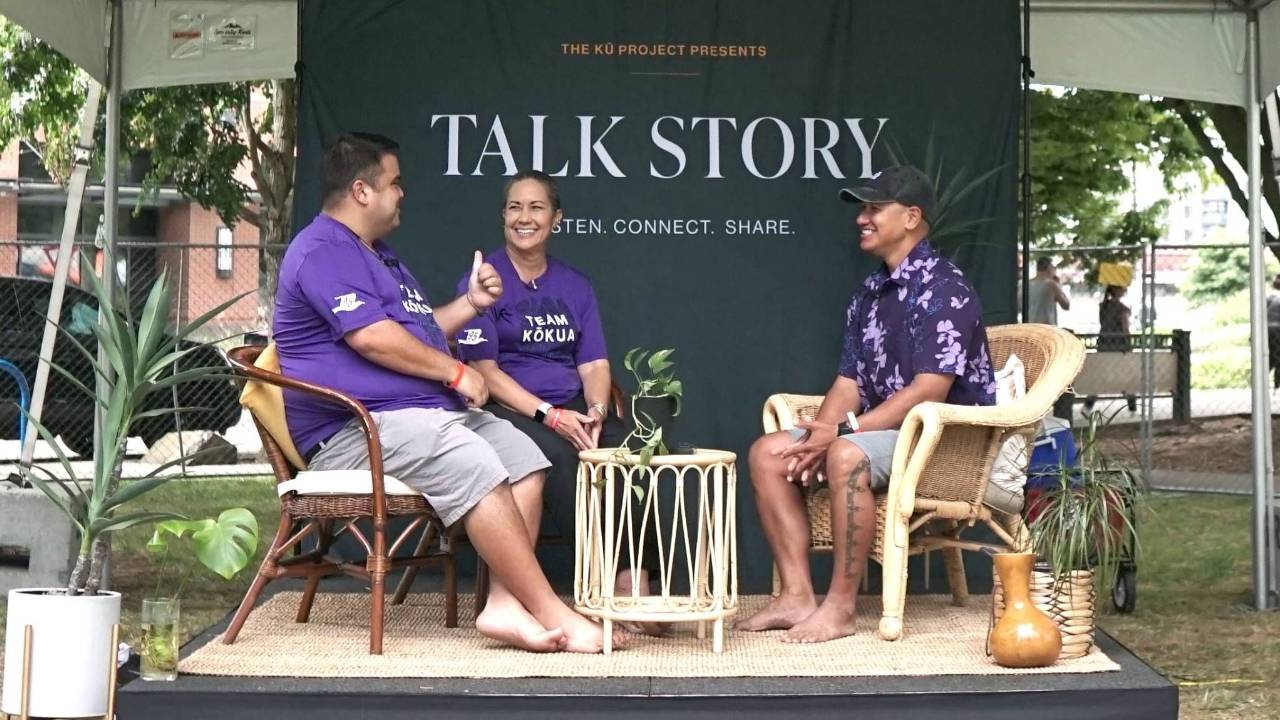
What our TALK STORY space and Aloha Wall at 4 Days of Aloha taught us about creating spaces for connection.
When we started thinking about what KŪ Project could bring to 4 Days of Aloha, we kept coming back to a simple question: What could we create that would give people a reason to stay and connect?
Events naturally move quickly. You walk from one thing to another, see familiar faces, grab some food, buy something, take a photo, and keep moving. There is energy in that movement, but we wondered if we could create a small interruption within it.
A place where you didn't necessarily have to do anything.
You could sit. Listen. Ask a question. Meet somebody. Share a story.
Or simply stay a little longer.
That thinking became our TALK STORY space and Aloha Wall installation.
At the time, we weren't calling any of this relational design. We weren't entering the event with a framework we were trying to demonstrate. We were following an instinct that has been underneath KŪ for a long time:
Connection matters.
Looking back now, 4 Days of Aloha feels like an early case study in a way of working we're only beginning to put language around.
Building a Space Around Conversation
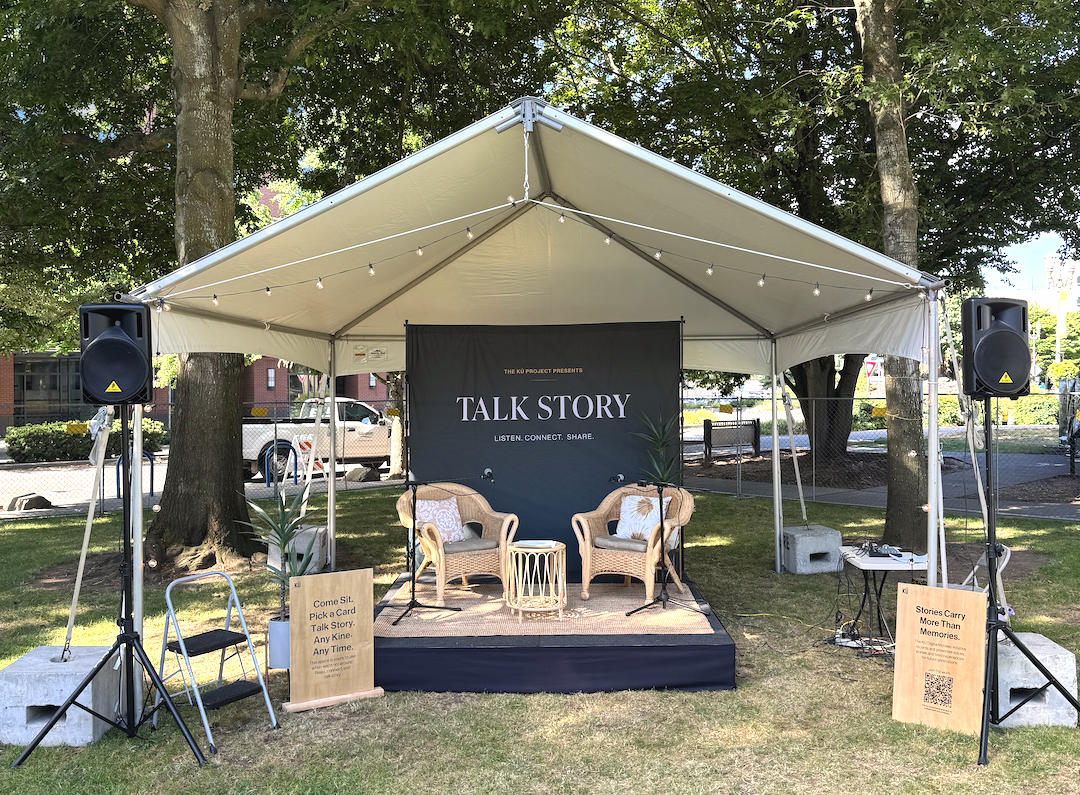
Our TALK STORY space wasn't designed around one continuous program.
Instead, it moved between different rhythms throughout the day.
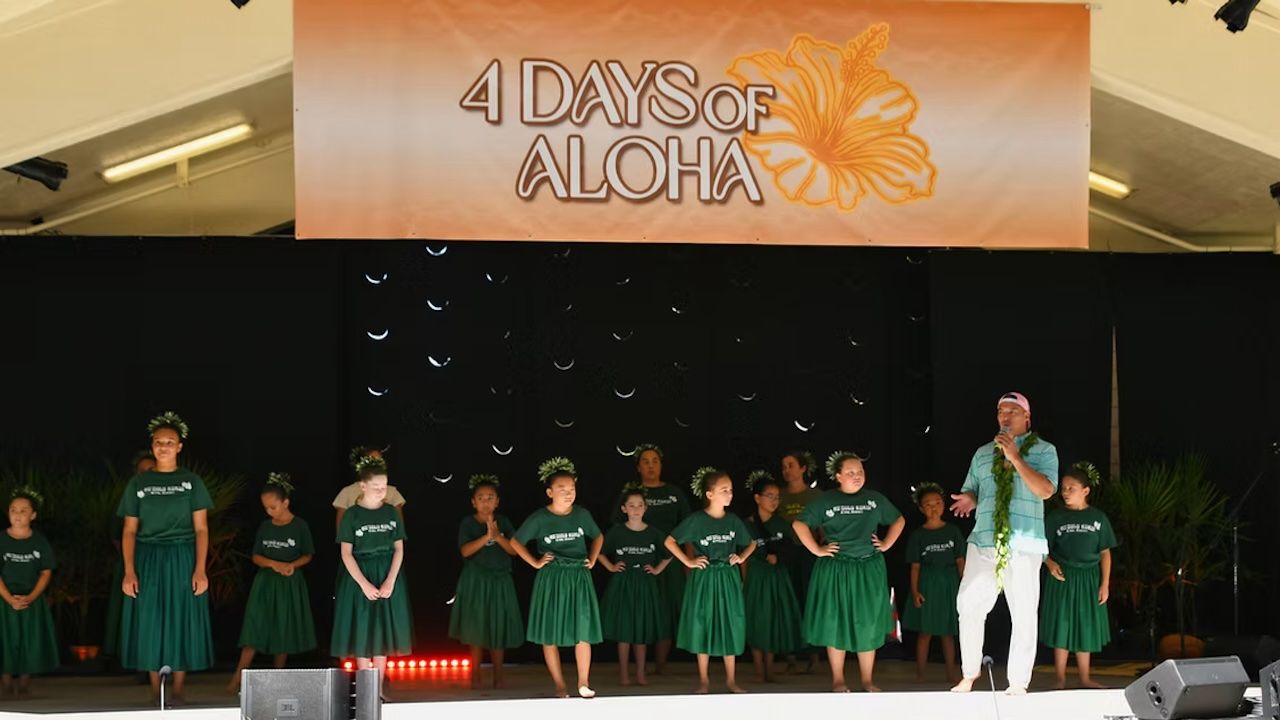
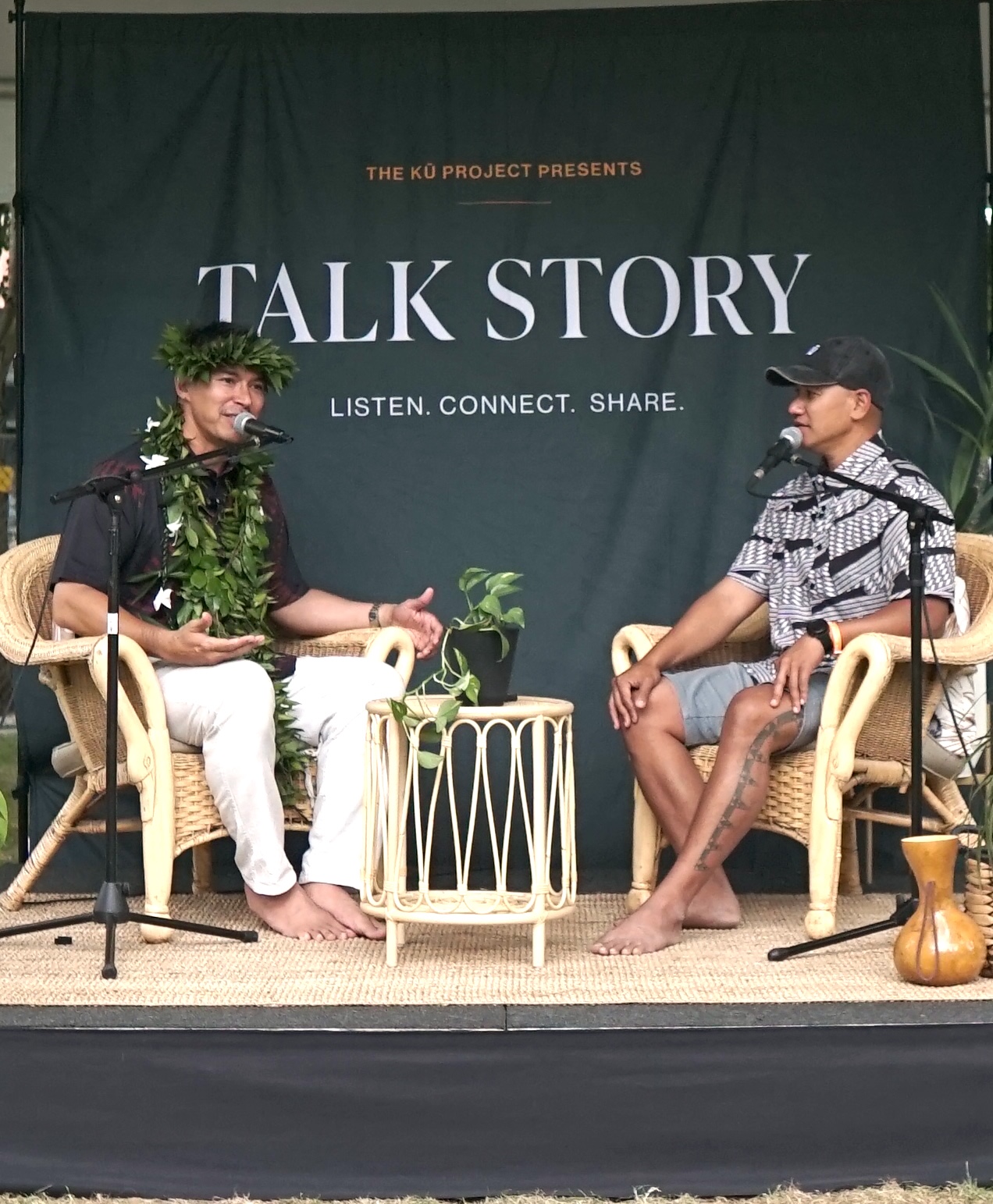
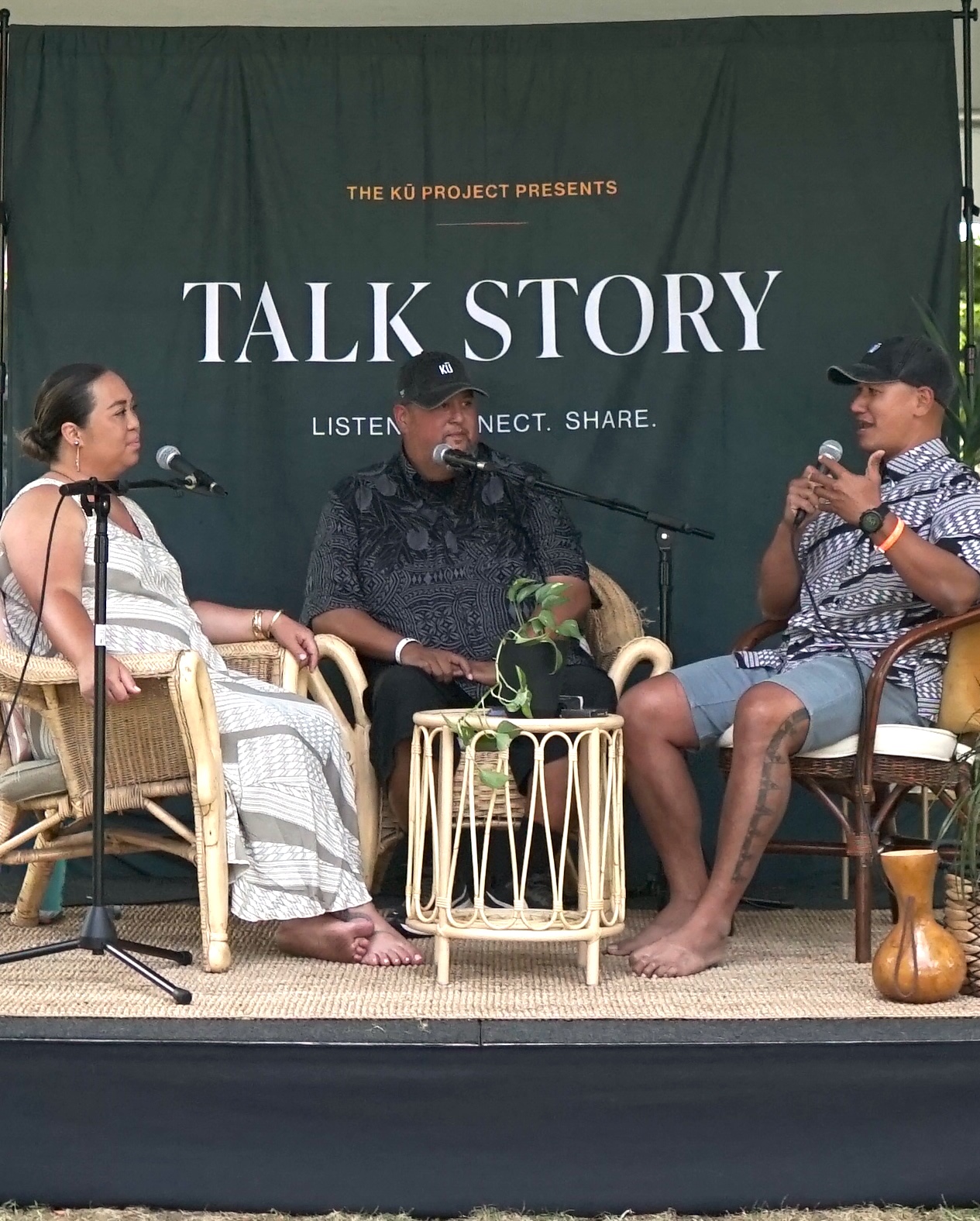
At certain times, we gathered for live TALK STORY sessions with special guests. We sat together and had conversations about their lives, work, experiences, relationships to community and place, and whatever else emerged once we started talking.
People could gather around, listen, laugh, learn, and occasionally recognize pieces of their own lives in someone else's story.
But when a live conversation ended, the space didn't close.
That was important.
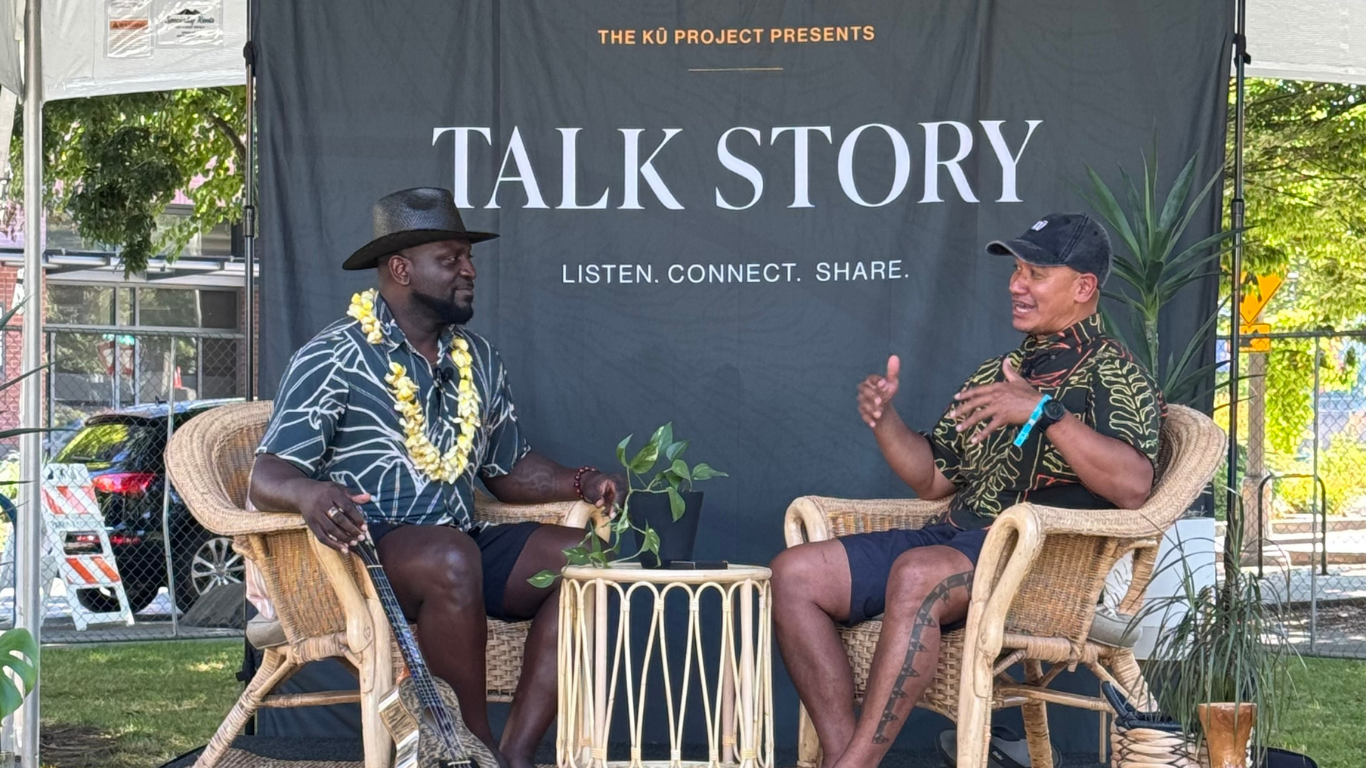 Between sessions, we made our KŪ Talk Story Deck available for anyone to use.
The deck contains questions around ʻohana and roots, community and place, small-kid-time memories, real life, and the future. Instead of KŪ always being responsible for leading the conversation, the cards allowed people to create their own.
Someone could pick up the deck with a friend. A parent could sit with a child. Family members could ask each other questions they might not normally think to ask. People who had just listened to one of our guests could continue talking among themselves.
That created an interesting rhythm throughout the space. Sometimes KŪ was facilitating the conversation. Sometimes we were simply providing the tools for someone else to begin one. And sometimes we weren't involved at all. People were talking to each other. Looking back, that may be one of the most important things we learned from the experience.
The Space Didn't Need Us
There's a temptation when creating an activation to make the brand the center of everything. The experience happens because the brand is performing, presenting, selling, or directing.
Our TALK STORY space began showing us another possibility. What if the most successful version of the space was one that didn't always need us?
The live sessions gave the space a rhythm and brought people together around a shared conversation. But the Talk Story Deck extended the idea beyond the stage or scheduled programming.
Conversation could continue after we stopped talking. That changed the role of the deck. It wasn't simply a product sitting on a table. It became part of the infrastructure of the space.
The object created an invitation:
- Pick a card.
- Ask somebody.
- Listen to the answer.
- Maybe answer it yourself.
One card could create a five-minute conversation. Another might bring up a story someone hadn't told in years. The card itself wasn't the important part. What happened between people because of it was. We're paying much more attention to that distinction now.
The Aloha Wall
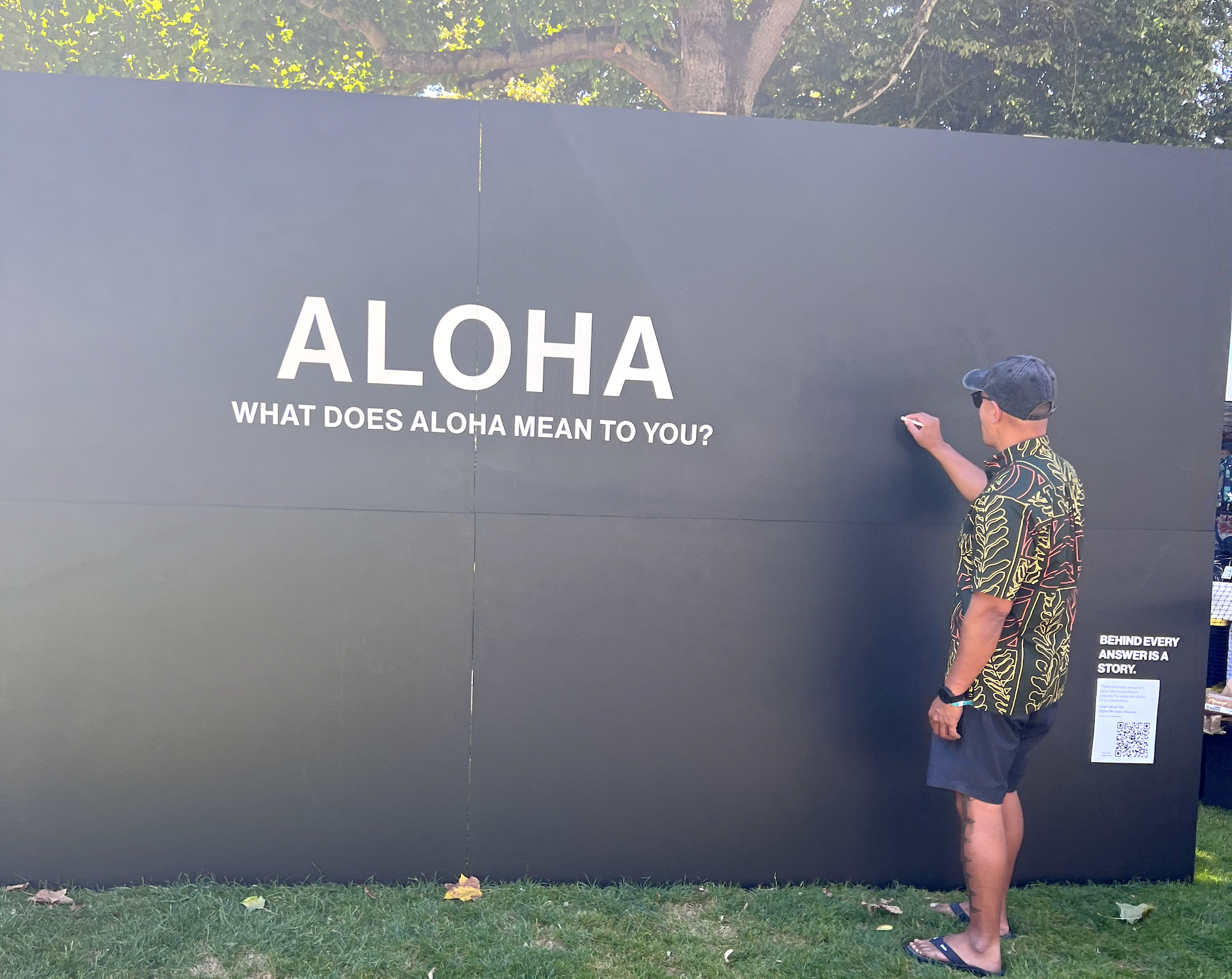
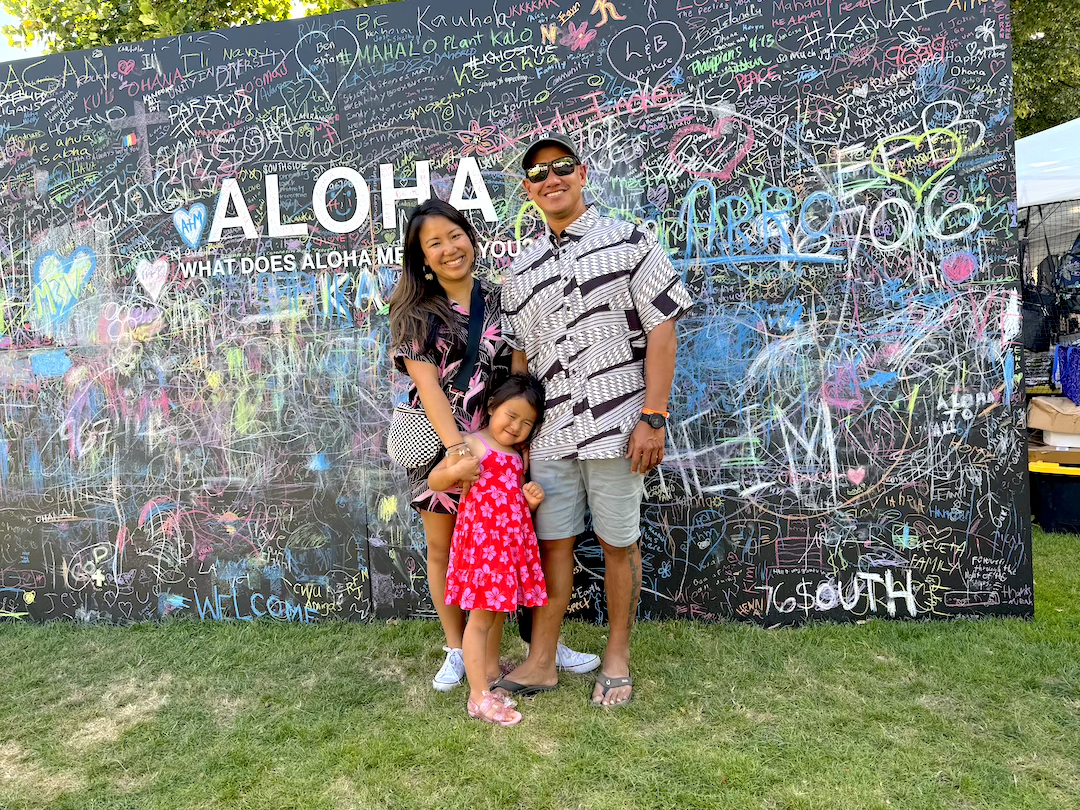
Nearby, the Aloha Wall was creating another kind of participation.
Rather than designing a finished installation for people to look at, we created something intentionally incomplete. The wall needed people.
Throughout 4 Days of Aloha, participants were invited to contribute to it. One response became another. Empty space slowly filled. Individual thoughts began sitting beside contributions from people who may never have met.
The installation changed throughout the event. That meant there was no version of the Aloha Wall we could have completely designed beforehand. We could create the structure. We could create the invitation. We could provide the materials. But the community determined what the finished piece became.
From a distance, it was one collective installation. Move closer and you could see the individual contributions that created it. That relationship between individual and collective has stayed with us.
The whole existed because of the individual. And the individual contribution took on another meaning because it became part of the whole.
Looking Back Through Relational Design
Since 4 Days of Aloha, we've been spending more time thinking about design at KŪ.
Not simply graphic design or how something looks, but what an object, space, experience, or system allows people to do.
We're beginning to call this approach - Relational Design.
The thinking is still developing. We're studying it through the things we're making rather than trying to arrive at a perfect definition first.
But one question keeps helping us:
What relationship could this make possible?
When we look back at 4 Days of Aloha through that question, we can see something we weren't necessarily able to name at the time. There were multiple layers of relationship happening in one relatively simple space.
During the live TALK STORY sessions, there was a relationship between guest and host, storyteller and listener, individual story and collective experience.
Between sessions, the Talk Story Deck shifted those relationships. KŪ moved out of the center. Now it might be parent and child, friend and friend, stranger and stranger, question and memory.
At the Aloha Wall, the relationship changed again. An individual's contribution became part of something collective. Different tools. Different interactions. Same underlying intention.
Create the conditions for connection.
From Object to Relationship
This experience has also changed the way we're thinking about the things KŪ makes. Our Talk Story Deck is a good example. On its own, it's a stack of printed cards.
You can talk about the paper, typography, packaging, colors, or number of prompts. Those design decisions matter. But none of them represent the fullest expression of the object.
The deck really comes alive when two people sit across from one another and someone asks a question. Then someone answers. Maybe they laugh. Maybe they remember something. Maybe the conversation moves somewhere neither person expected.
At that point, the object begins disappearing into the relationship it helped create. We're becoming increasingly interested in designing things that behave this way. Things that don't ask to remain the center of attention.
Things that become more meaningful through use. Things that work differently when another person enters the experience. We've started describing that progression as:
USE → RELATIONSHIP → MEANING → IDENTITY
Something begins by being useful.
Use creates or strengthens a relationship.
Repeated relationships create meaning.
Over time, those meanings can connect to how we understand ourselves, our families, our communities, and the places we belong to.
At 4 Days of Aloha, we could see small versions of that progression everywhere. A deck became a conversation. A chair became somewhere to sit together. A question became a memory. A wall became a collective record. None of those transformations happened because we added more design. They happened because people participated.
Designing Something Incomplete
One of the ideas we're carrying forward from the experience is that relational design may require us to intentionally leave things unfinished. Traditional design often celebrates completion. The designer solves the problem. The object is produced. The installation is finished. The audience receives it.
But some things shouldn't be complete until people arrive. The Talk Story Deck without a conversation is incomplete. The Aloha Wall at the beginning of the weekend was incomplete. Our TALK STORY space without people sitting in it was incomplete. And that incompleteness wasn't a flaw. It was the invitation.
We had to leave enough room for other people to change the experience. That's becoming an important principle for us as we think about future KŪ objects, spaces, gatherings, and collaborations.
We don't always need to determine exactly what something will become. Sometimes our responsibility is simply to create the conditions for something to happen.
 More Than Content
There was another realization that came from the weekend. Our live conversations produced photographs, video, stories, and moments we could share through KŪ's channels. Those things can become content.
But we're becoming increasingly careful about treating everything we document as content first. Some things are records. Some things are memories. Some things might become more valuable with time rather than less.
A conversation shared at 4 Days of Aloha might be interesting today. Years from now, the same conversation could become a record of a person, a family, a community, or a particular moment. That thinking has continued into the development of the KŪ Digital Moʻolelo Preservation Initiative.
The question isn't simply, What should we post?
We're also asking:
What should we preserve?
Modern media gives us incredible tools for documenting people. Cameras, audio recorders, phones, digital archives, and online platforms allow us to capture and distribute stories more easily than almost any generation before us. The responsibility is deciding what we do with them.
For KŪ, we're becoming increasingly interested in using those tools not simply to fill a feed, but to build a record.
 What We Took With Us
We arrived at 4 Days of Aloha thinking about how to create a meaningful KŪ presence. We left thinking much more about how to create meaningful participation. There's a difference.
Presence asks:
How does KŪ show up here?
Participation asks:
What can happen here because we showed up?
That second question is increasingly guiding our work. It changes how we think about a gathering. It changes how we think about an object. It changes how we think about a piece of furniture. It changes how we think about storytelling. It even changes how we understand the role of KŪ.
Maybe our job isn't always to be the storyteller. Sometimes our job is to create the place where stories can be told. Maybe our job isn't always to create the finished object. Sometimes our job is to create the object that helps something happen between people. Maybe our job isn't always to fill the space. Sometimes we need to leave enough room for someone else.
What Happens Between
Looking back, the most important part of our space at 4 Days of Aloha wasn't any single thing we built. It wasn't the stage. It wasn't the chairs. It wasn't the Talk Story Deck. It wasn't the Aloha Wall. It was what happened between them.
Between a question and an answer. Between someone sharing a story and someone listening. Between one person's contribution to the wall and the hundreds that eventually surrounded it. Between people who arrived together and, sometimes, people who had never met before.
The objects and the space helped create those moments, but they couldn't determine what those moments would become. People did that.
That's a lesson we're carrying into the work ahead.
As we continue developing KŪ's approach to relational design, we're becoming less interested in designing things simply to be looked at and more interested in creating things that become meaningful through participation.
Objects that invite use. Spaces that allow people to gather. Questions that open conversations. Experiences that leave room for someone else to contribute. We didn't have all of this language when we arrived at 4 Days of Aloha. We made something. We invited people into it. We watched what happened. And afterward, we began to understand the work differently. Maybe that's part of the practice too.
Make. Gather. Observe. Learn. Make again.
4 Days of Aloha gave us an early glimpse of what that practice could become. And as we continue building KŪ, one question is becoming increasingly important:
What are we making possible between people?
Mahalo to everyone who sat with us, listened to our guests, picked up the Talk Story Deck, asked someone a question, contributed to the Aloha Wall, shared a memory, or brought someone else into the space.
You didn't just experience what we created. You helped shape what it became.